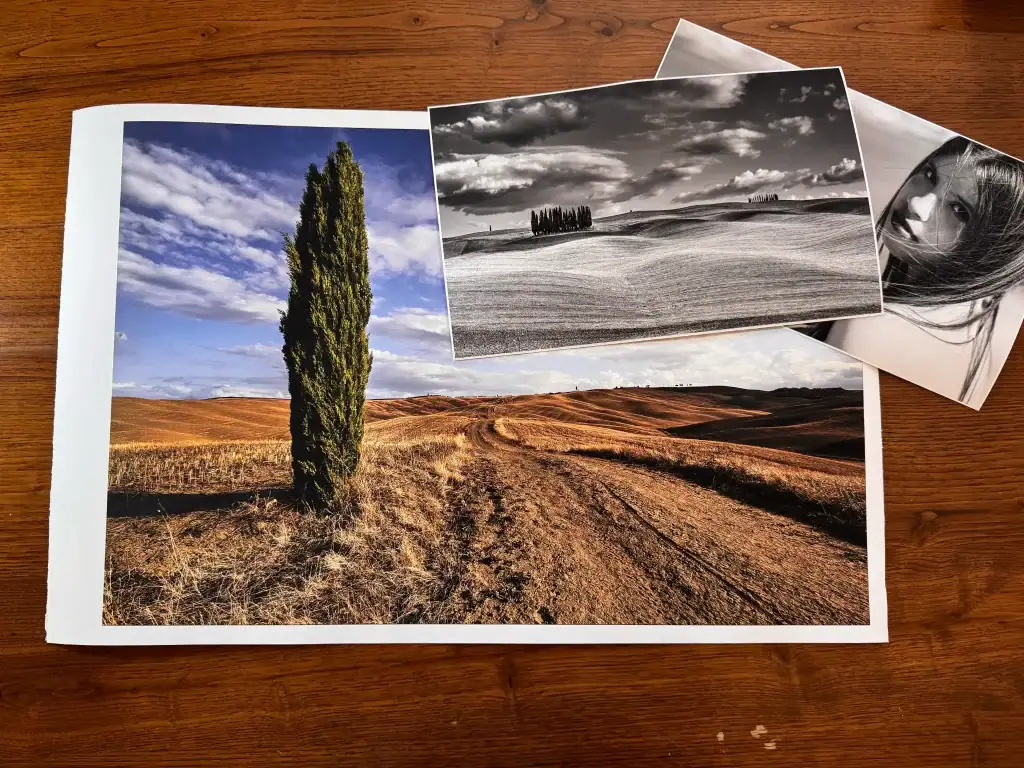
Photography is an image bounded in space. Period. Whether it’s born from chemistry or pixels, its natural destination is paper. Today, the web and photography move so fast that printing seems like a “separate matter” for a dedicated few, something that can be done without. It might be interesting to delve into this topic, but it becomes superfluous when the only difficulty I face at this moment is finding the right words to describe the beauty and aesthetic significance of a Fine Art photograph on 100% cotton paper.
Honestly, conveying this sensation is complex… whether it be with black and white or color photographs, each with its own differences and peculiarities! To look at such a print, to touch that paper with your own hands, and to witness the disarming difference between a photograph seen on a monitor and a completed work like this—that almost becomes the primary purpose of this article. This is something to be admired while holding it delicately in your hands or seeing it hung in its frame; these are all things that can be described, but even if I were the most gifted writer in history, I could never replace the eyes and the hands of the reader.
We need to be blunt: a photograph that isn’t printed is only half a work of art. If you don’t conceive it for paper, you’re doing something else, not photography. As Sebastião Salgado has masterfully stated: without a physical medium, the image remains volatile, latent, something profoundly different from photography itself.
Of course, there are cases where only a file is needed for a website or a presentation, but no one forces us to produce a mediocre image unsuitable for print. There is no such thing as “retaking” a shot; if, tomorrow, that file is needed for a larger project or a book, the chance to tell that story will be lost forever. If it’s not good for paper today, it never will be.
The Digital Drift
Settling for the screen means accepting that the image will drift away. Digital is an incredible tool, but it has a brutal flaw: it makes everything mundane and immediate. Among millions of birthday snapshots and “Instagrammed” rows of cypress trees repeated to the point of obsession, the exceptional becomes invisible. Memory is lost, the identity of the subject is diluted, and the very essence of the shot vanishes.
The old family compact cameras didn’t perform miracles in fact, today’s smartphones are overall better but every frame mattered. The world was different, as was the meaning of photography and what it represented for people and families. A roll of 24 or 36 shots had a cost, and not just a financial one; you pressed the button only if it was worth it. Those few photos are still there, in some box, telling the story of a life lived—something that seems almost superfluous today. Those photos didn’t die in a failed backup or a smartphone upgrade. Instead, the thousands of images we bury in our phones today hide from one another: this freedom to shoot endlessly has become the prison of our memories.
My Modern “Darkroom”
For those in this profession, the bond with printing is pure instinct, like meat to a lion. I won’t be a hypocrite: I have an overwhelming nostalgia for the smell of acetic acid, the wait under the dim red light for the splashing of trays to reveal the image as it rises from the white paper. It’s an enchantment that technology will never erase.
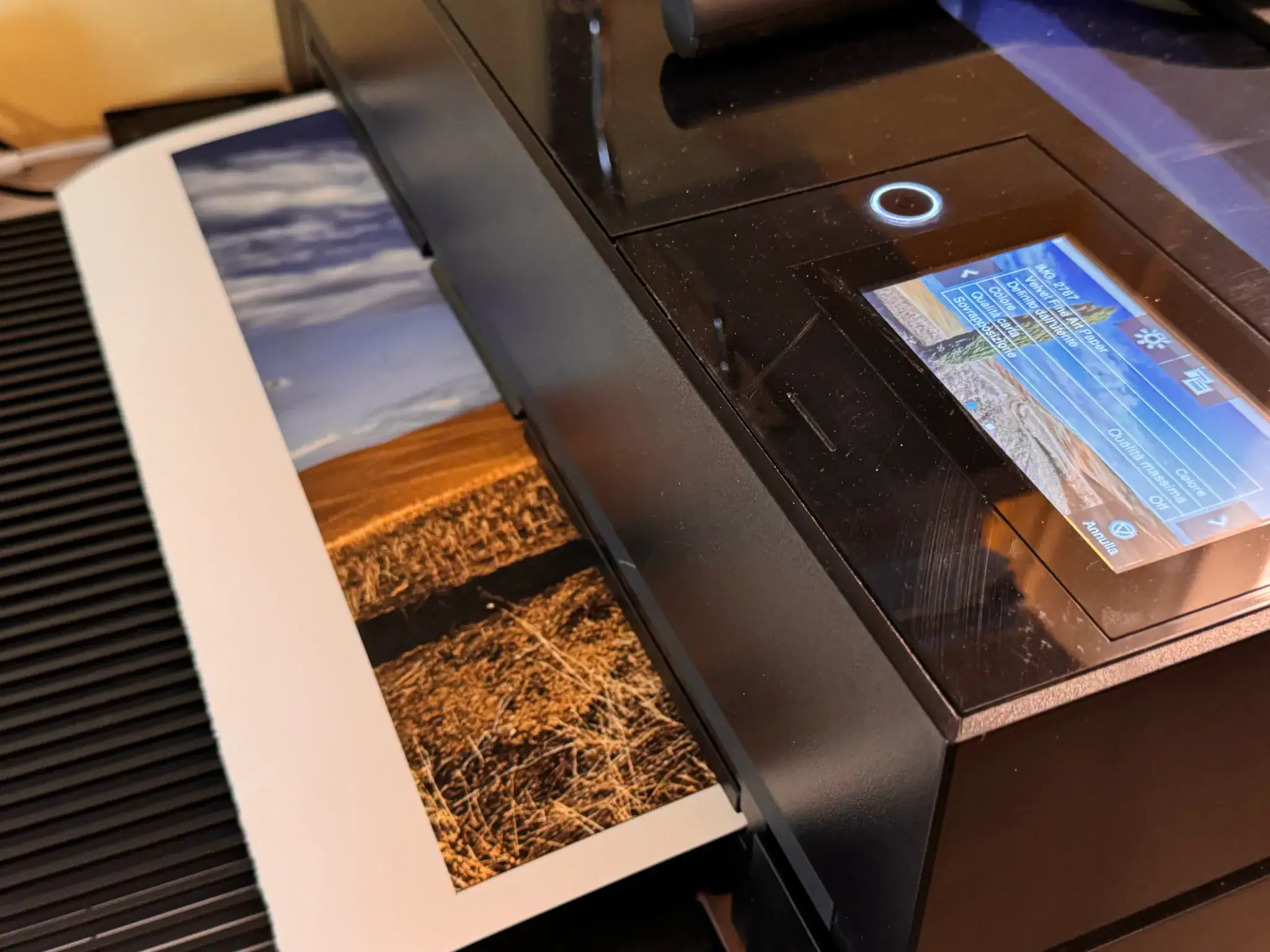
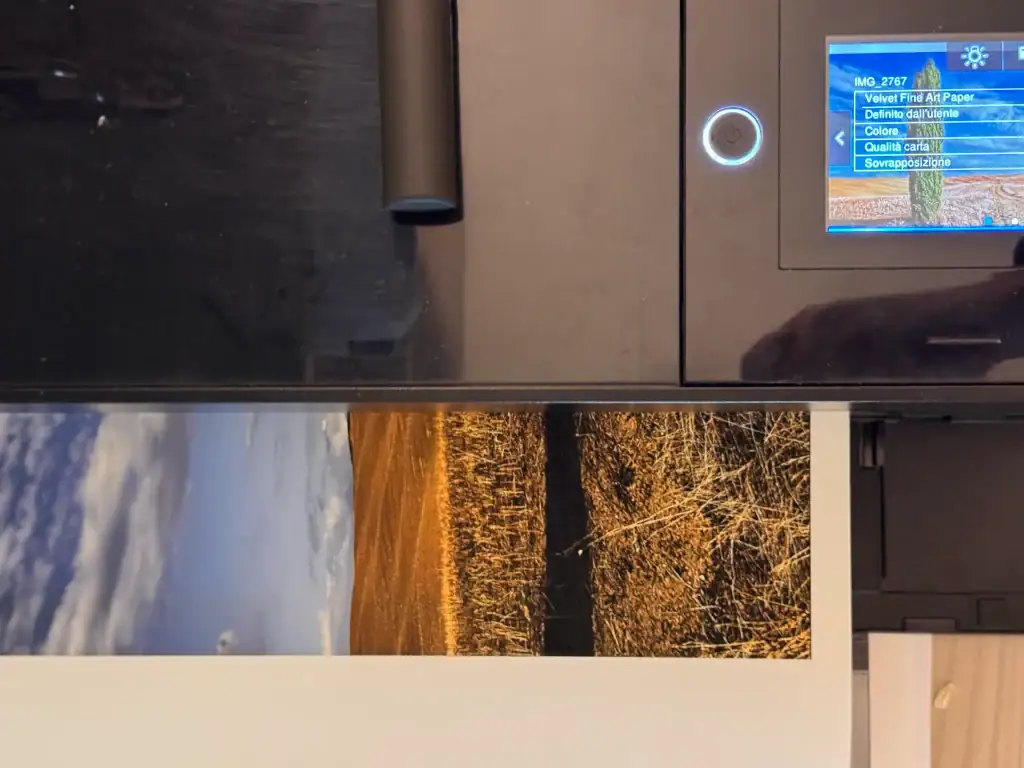
But we must be practical: nostalgia alone isn’t enough to manage today’s complexity. My printer isn’t just a piece of office hardware; it could be defined as my modern darkroom. Those who have spent sleepless nights printing know it’s not truly a darkroom, but like our old enlarger, it is the tool that allows us to complete the journey of important projects and to preserve every memory that deserves to stay.
Managing the printing process myself means not delegating my vision to an algorithm or a distant technician. Choosing the texture of the paper, cotton, baryta, matte, is like calibrating the tone of my voice while telling a story. It is the final act: transforming an electric emotion into an object that occupies space and speaks with the substance of matter.
An Invitation to Substance
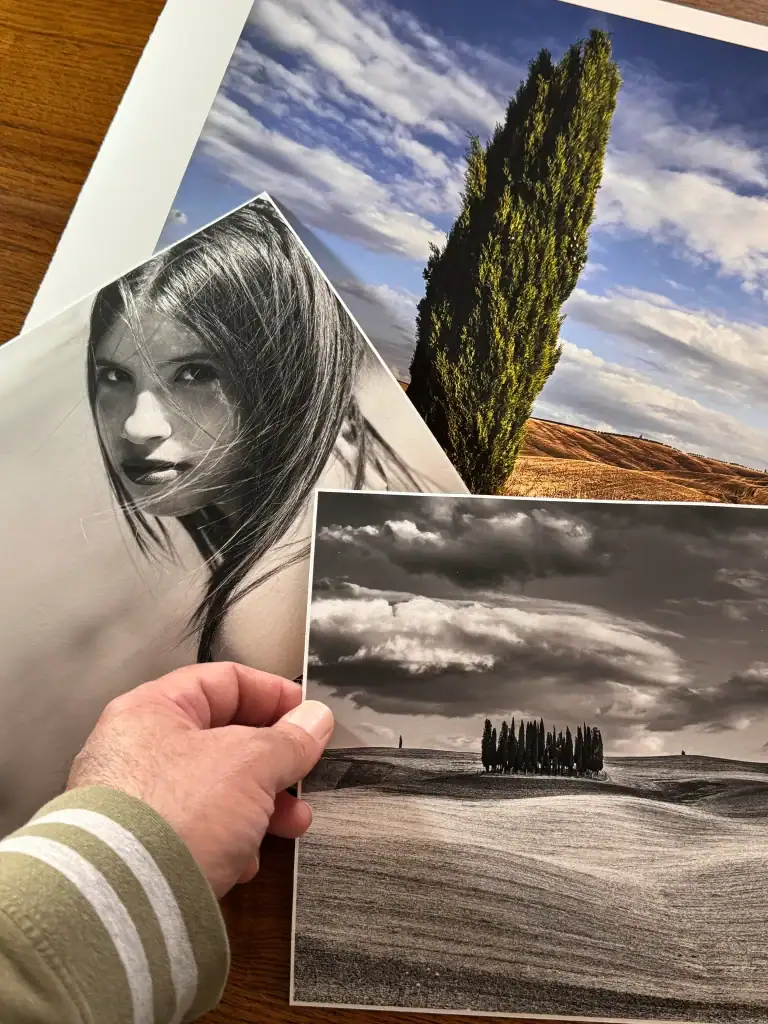
All this isn’t just studio philosophy; it’s an invitation to reclaim what matters. Photographs shouldn’t be born to fill hard drives or to justify the latest smartphone model; they should be born to last. I prefer the idea of telling stories of women, men, or places—stories capable of surviving the next software update or the next device upgrade.
Whether it’s personal research or the account of a fragment of life, paper is the only way to fix a moment forever. A well-printed photo is an object you touch, give as a gift, or inherit. It is matter that does not vanish. Every precious image deserves to be admired even when there is no signal or the battery is dead: because real life doesn’t need a connection to be remembered.
