
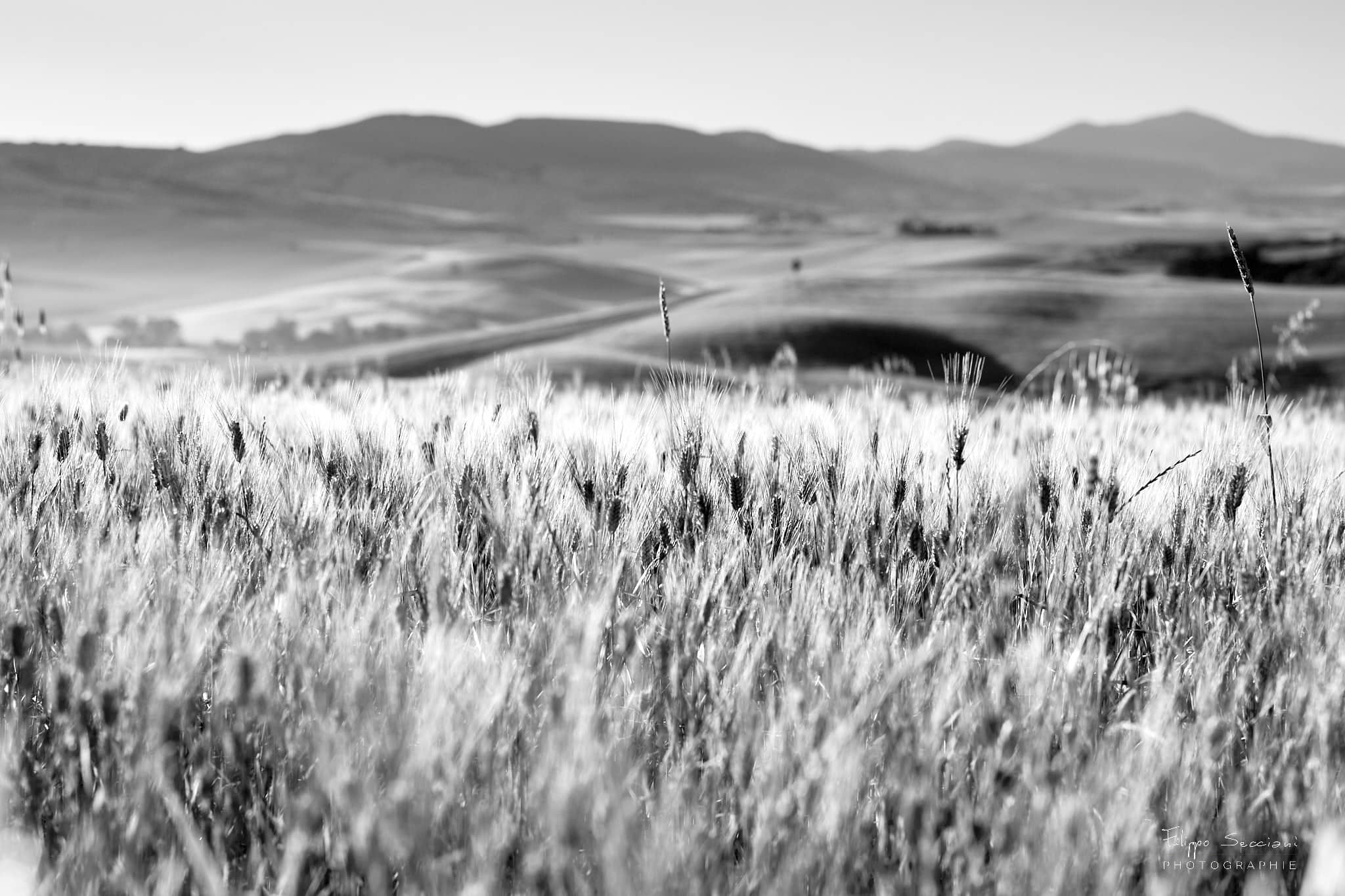
The Zoom, the Prime and the Colleague
A colleague once told me during a chat: “This zoom was built for sports: it’s sharp, saturated, with clean, well-defined edges. Use it for landscapes and you get a brilliant, punchy look. The secret is to use gear for what it does best, rather than forcing it into unfavorable conditions.”
That was the gist of it, even if the words weren’t exactly those. I asked him: “But if you’re so satisfied with the zoom, why did you shoot this landscape with a 50mm prime?” He couldn’t explain it clearly; he felt a difference he couldn’t put into words. At the time, I only used prime lenses and didn’t fully understand what he was trying to tell me. I realized it later, when zooms joined my kit: two lenses can have the same quality, but their behavior is different. Comparing a zoom to a prime made me realize that my search for style also passes through choosing the right tool. Flaunting an expensive lens is no boast, and using a cheap one is no reason for shame.
Late Light and a Kick to the Imagination
Early morning in Val d’Orcia produces exceptional shots, all backlit. If the conditions are right, you get spectacular photos. But morning turns to late morning fast, and the light changes. After a certain hour, everything that was spectacular becomes “descriptive.” Photography’s job isn’t just to make sharp, focused images, but to transmit something. We can settle for a simple memory—that’s fair—but we can also look for something deeper.
In that hour of tired light, my intent was to shake myself out of the stupor. I chose the sharpest lens, with the softest, silkiest bokeh and the best shadow recovery. I wanted the focused ears of grain to punch through the blur, searching for a depth that felt almost three-dimensional. But above all, I had to take my imagination—which had already put on slippers and settled on the sofa in front of the TV—and give it a kick in the teeth to wake it up.
Stylistic Choices and Sacrifices
Making this photograph, I looked for stylistic answers and found them. By showing it, I’m sharing something deeply personal, almost asking if my choices were right. After all, if I had used the zoom, the photo would be different. Worse? I don’t know. When you decide on a vision and a project, you automatically give up the infinite other possibilities you’d have with different gear and points of view.
At a certain level, it’s not quality that counts, but the behavior of the glass. A macro medium-telephoto isn’t right for a beauty portrait: it’s too sharp, too harsh, when you need silkiness and naturalness. It’s not that one is better than the other; they are just different, and therefore the photographs are different.
The Nature of the Gaze
This photograph lives around a narrow, well-defined focal plane. Its graphic power lies in the heavy blur that leaves the rest to the imagination. These images have an impact because our eyes, without us realizing it, see exactly this way: they frantically select one point after another and transmit infinite stills to the brain, which our consciousness then stitches together.
In reality, we have no depth of field, but our “autofocus” is so incredible that we trick ourselves into believing everything is in focus. In this image, the visual narrative is nothing but a mirror of our own nature: it shows how our eye actually selects and sees things before the mind focuses everything at once. We like bokeh because it’s natural, like the sound of running water compared to a jackhammer. Perhaps some images just work because they reconnect with our true nature.
